
- Guangzhou, China -
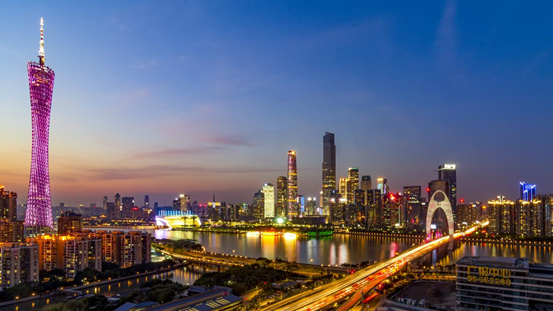
The original name of Guangzhou was "Chu Ting". In 214 BC, Emperor Qin Shihuang unified Lingnan and set up the Nanhai Eparchy. The Administration office was based in Panyu, so Guangzhou was called Panyu at that time. Until the year 226 AD, to strengthen his rule, Sun Quan divided Jiaozhou into two parts: Jiaozhou and Guangzhou. The administration office was then based in Guangxin (today's Wuzhou of Guangxi province and Fengkai county of Guangdong Province), so the name of Guangzhou took the part "Guang" from Guangxin. After the division of Jiaozhou and Guangzhou, the administration office of Guangzhou moved to Panyu and the name Guangzhou appeared. Until the establishment of City Hall in 1921, "Guangzhou" became the name of the present city.
Since flowers here blossom all year round, Guangzhou is called "City of Flowers". Guangzhou has other nicknames such as "Yangcheng" (City of Rams) and "Suicheng" (Rice Spike City) and there is a beautiful legend which goes : long, long ago in the Zhou Dynasty, there were five celestials riding five rams with rice spikes in their mouths. The five celestials gave rice spikes to the residents of Guangzhou wishing them a bumper harvest and the banishment of famine for all time. Finally, the celestials flew away and left the five rams who immediately turned into stones. Today, the five rams sculpture at Yuexiu Park is the symbol of Guangzhou.